
 Yesterday, I highlighted several of the competitive sections at IDFA, which launches its 28th edition tonight, Wednesday, November 18. This supplemental post provides an overview of the impressive fest’s many non-competitive sections, which, in addition to scores of standout titles which have been on the festival circuit this year, includes several less-familiar offerings not yet covered here. The latter are the focus of this overview:
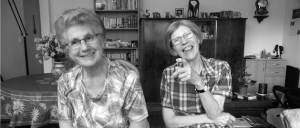 More than two dozen recent projects from established documentarians appear in the festival’s signature Masters section. In addition to well-traveled work by auteurs like Frederick Wiseman, Barbara Kopple, Patricio Guzmán, and Alex Gibney, among several others, are recent projects by filmmakers less known in America who have had past work appear at IDFA several times before, such as: Frans Bromet’s WELCOME HOME, in which the filmmaker, critical of Israel’s policies, visits relatives there to untangle a family feud; and Stéphane Goël’s ABOUT HEAVEN (pictured), which surveys Swiss seniors about their thoughts on afterlife.
 IDFA’s Best of Fests offers Amsterdam audiences the chance to catch up on more than forty favorites from this past year’s festival circuit, including standouts that debuted at Sundance, Toronto, Tribeca, Berlin, and Hot Docs. Among these are a few titles that have not yet been covered here, including: Bettina Perut and Ivan Osnovikoff’s SURIRE (pictured), an observational film about a Chilean salt flat facing destructive exploitation despite its protected status; and David Aronowitsch, Ahmed Abdullahi, Sharmarke Binyusuf, and Anna Persson’s I AM DUBLIN, about a Somali asylum seeker hiding out in Sweden who is asked to act in a fictionalization of his life.
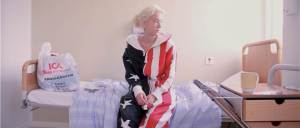 The Panorama section presents more than three dozen new features from around the world. Among the offerings from around Europe are: Åsa Ekman’s SAY SOMETHING (pictured), which follows a young woman reckoning with the aftermath of an abusive childhood; Anne-Marieke Graafmans’ ACCORDING TO PROTOCOL, on the performance pressures faced by Dutch emergency call operators; Krzysztof Kopczynski’s THE DYBBUK: A TALE OF WANDERING SOULS, about the tensions between Hasidic Orthodox pilgrims and the local Ukrainian populace of their annual pilgrimage site; Kurt Langbein’s LAND GRABBING, an exploration of the disturbing trend of land exploitation by foreign investors; and Kari Anne Moe’s REBELS, a portrait of Norwegian dropouts seeking work and self-confidence.
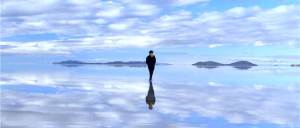 Panorama selections representing filmmaking from outside Europe include: Pankaj Johar’s CECILIA, about the filmmaker’s attempt to help his housekeeper find the truth behind her daughter’s death; Maheen Zia and Miriam Chandy Menacherry’s LYARI NOTES, which looks at the impact of music lessons on four girls in a dangerous Pakistani neighborhood; Alka Sadat’s AFGHANISTAN NIGHT STORIES, on the quotidian affairs of a special commando unit of Afghan soldiers; Moein Karimoddini’s ATLAN, which profiles a Turkmenistani race horse trainer; Ada Ushpiz’s VITA ACTIVA, THE SPIRIT OF HANNAH ARENDT, an exploration of the political theorist’s still-relevant ideas; Qing Zhao’s PLEASE REMEMBER ME, about the filmmaker’s aunt and uncle, an elderly couple facing advanced age, memory loss, and illness; and Mike Plunkett’s SALERO (pictured), a portrait of a generational Bolivian salt seller as he faces the consequences of rapid development.
 Ever popular with audiences, films about musicians appear in IDFA’s Music Documentary section. In addition to presentations of recent portraits of the likes of Janis Joplin, Mavis Staples, Nina Simone, Keith Richards, and Sharon Jones are some unsung new and recent films, such as Daniel Cross’ I AM THE BLUES, on aging blues musicians who are still performing; and Alex Hoffman’s THE REDEMPTION OF THE DEVIL (pictured), a portrait of a hard-living rock musician who is also a rightwing-leaning preacher.
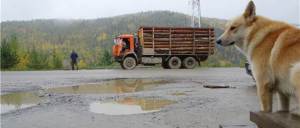 Four feature-length hybrid projects – plus several more shorter works – appear in the Paradocs section. The former include: Mark Cousins’ ATOMIC: LIVING IN DREAD AND PROMISE, a consideration of the benefits and costs of the atomic age; and Ben van Lieshout’s SKETCHES OF SIBERIA (pictured), a revisitation of a 19th century expedition through Siberia. Rounding out the program are: an Errol Morris retrospective and special curated section; a Robert Frank retro, including a screening of the recent portrait by Laura Israel; and a far-ranging retrospective of Dutch documentaries from 1965-1990, among other special programs.

 what (not) to doc