
 A previous post at the end of last week ran down the first half of this year’s Toronto docs I managed to see: INTO THE ABYSS, URBANIZED, THE PATRON SAINTS, DARK GIRLS, and ARIRANG.
The remaining titles include:
COMIC-CON: EPISODE IV – A FAN’S HOPE
Morgan Spurlock takes an up-close look at San Diego’s enormous comic book, toy, and pop culture convention in this entertaining and at times genuinely affecting doc (pictured above). Breaking with his typical MO, the director does not appear on camera. Spurlock is one of a very small number of filmmakers whose personality/persona translates well as an on-screen guide, but in this case, it seems his instinct to say out of the frame is a good one – Comic-Con is already enough of a spectacle, and Spurlock follows enough colorful characters, that his presence really isn’t needed. His main subjects include two aspiring comic book artists, a veteran comic book dealer feeling the recession, a costume designer hoping to win an award for her elaborate Mass Effect designs, and a fan who plans to pop the question to his appealingly nerdy girlfriend, who he met at the con the previous year. Supplementing these threads are interstitial comments from celebrity fans and comics professionals. Encouraged to make the doc by Marvel Comics’ guiding light Stan Lee (who serves as an executive producer), Spurlock wisely speaks to and for the fans, as indicated by the film’s subtitle. While comics fans will get more of the references than a more casual pop culture fan, the film never becomes too inside baseball to alienate non-geek viewers. Taking this as his focus, Spurlock brings the event back to its roots – a celebration of comics and those who love them – rather than the often Hollywood-oriented spectacle that it’s become in recent years, pushing comics to the periphery.
PAUL WILLIAMS STILL ALIVE
Having long assumed that legendary 1970s songwriter/performer Paul Williams had died, director Stephen Kessler was surprised to discover instead that the once-ubiquitous celebrity stepped out of the spotlight due to drug and alcohol addiction but was still alive. Long clean and sober, Williams now leads a quieter life, though he still makes a living performing. Kessler sensed a story there, and set out to get his idol to agree to participate in a documentary project. Originally planning to stay off camera, Kessler was convinced by the straight-shooting Williams to be in the film, otherwise the celebrity felt he’d be merely acting for the camera. So, the director became a character, and while the focus is ostensibly on Williams, the film ends up being the story of their developing friendship. I understand Williams’ point, but, unfortunately, I don’t think the collaboration is as successful as they’d hoped. As I’ve written about many times in this space, it’s very hard to pull off the director-as-subject. What might have started off as an approach to put the real subject at ease ends up taking over the film after a more promising start. Kessler seems like a nice guy, but he’s not the one I want to know about. But that’s who the audience learns more about – for example, much time is wasted on Kessler’s anxiety about traveling to a dangerous part of the Philippines while following the untroubled Williams around (nothing happens), while surprisingly little is conveyed about Williams’ struggles with addiction.
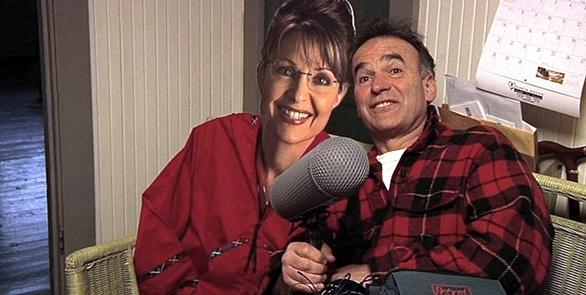 SARAH PALIN – YOU BETCHA!
Continuing a theme, legendary documentary troublemaker Nick Broomfield also appears in his latest film (co-directed with Joan Churchill), an exposé on the already ridiculously over-exposed celebrity politician. This self-reflexive approach is, of course, a key component of Broomfield’s filmmaking, with his satiric chronicle of making a doc (with himself at its center) speaking volumes about his supposed subject. Broomfield knows, as his audience does, that he has as much chance of scoring an in-depth interview with Palin as Palin has of becoming Obama’s next running mate. Watching the UK director slip around on the ice in Wasilla AK, ask for an interview at a Palin book-signing, or walk into the former governor’s office unannounced are all supposed to be part of the fun. Beyond these hijinks, he does manage to ingratiate himself to Palin’s parents, at least for a time, and to track down a number of her enemies who speak to her vindictiveness and ruthless ambition. By this point, his audience has come to expect and to accept him appearing in his films. Without his presence, it couldn’t exist – at least not in the same way. Still, in contrast to PAUL WILLIAMS, his goal remains firmly to tell the viewer about Palin, not about himself, and, because of that, I feel it works more effectively. Still, as a whole, the doc feels like more of a guilty pleasure than a must-see – there’s nothing that’s particularly surprising or revelatory here, but it’s very watchable and often entertaining.
THE EDUCATION OF AUMA OBAMA
From Palin we move on to Obama, whose presence figures strongly in Branwen Okpako’s portrait of the President’s older half-sister, Auma. Like Barack, Auma is a community organizer, presently living in her native Kenya, but she has accomplished much in her life, studying dance and linguistics in Heidelberg and film in Berlin. She previously made a film about her not-yet-famous half-brother, on the occasion of his visit to Africa to meet his father’s side of the family – fascinating footage which is included here. Beyond this, the future President serves as something of a structuring element in the film – while Auma’s background, and that of her family, is explored, together with her engagement on issues of education, identity, and post-colonial independence, the lead-up to the 2008 US Presidential election plays out. Tuning in on snowy television broadcasts, there’s deep pride demonstrated by Auma and her family, watching as history is made, and an Obama is declared the victor. Still, while this kinship provides an entry point for viewers, Okpako’s well-constructed film is unmistakably about Auma. She emerges as a charismatic, intelligent, and active participant in trying to address lifetimes of inequality by forging a more hopeful future.
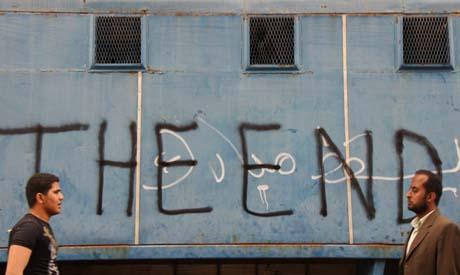 TAHRIR 2011: THE GOOD, THE BAD, AND THE POLITICIAN
Politics is central to Tamer Ezzat, Ayten Amin, and Amr Salama’s three-part examination of the Egyptian uprising that finally led to Hosni Mubarak’s abdication after thirty years of despotic rule. It’s a testament to the filmmakers that they were able to bring such a thoughtful approach to these three chapters in the wake of the revolution. Most engaging is the third, THE POLITICIAN, bringing a sense of satiric humor to a portrait of Mubarak. Counting down the ten steps to becoming a dictator – including dyeing your hair to appear younger, naming buildings after yourself, and making people sing songs about you – there’s a more polished sense to this section, and an approach that serves to very clearly explain decades of Egyptian history for an audience that may not be already in the know. A close second is THE GOOD, more conventional in tone and approach, but remarkable in capturing a sense of the immediacy of the uprising. A variety of Egyptians present in Cairo’s Tahrir Square, the hub of the demonstrations, recount their roles – from helping tend to the wounded to documenting the goings-on. Least successful, but still worthwhile is the film’s second chapter, THE BAD, which takes a closer look at the violent actions of the police forces against the demonstrators. It feels overlong for what it is, and offers little unexpected insight. Still, combined, the project is able to convey the import of the events of January and February, what the demonstrators faced, and why it mattered (and continues to matter) so much.

 what (not) to doc