
 The 24th edition of the International Documentary Film Festival Amsterdam wrapped up this past weekend, announcing awards on Friday. I was fortunate to have a chance to view the winners of the Best Feature-Length (PLANET OF SNAIL) and Best Mid-Length (MONTENEGRO) competitions, and served on the jury for First Appearance (THE VANISHING SPRING LIGHT) (pictured). Jury responsibilities meant that I wasn’t able to catch a number of films in other categories, including winners 5 BROKEN CAMERAS, 900 DAYS, THE BETRAYAL, THE LAST DAYS OF WINTER, and BITTER SEEDS. Beyond these, I would have liked to have seen PUTIN’S KISS and BAD WEATHER in the Feature-Length competition, JEROME JEROME and MEET THE FOKKENS in the Dutch competition, and DIANA VREELAND: THE EYE HAS TO TRAVEL and THE WILL in Reflecting Images: Panorama – but I’m certain that most of these will be making the festival rounds. This post offers my thoughts on some of the films in my competition, while a follow up tomorrow will include a selection of films from other competitions that I did manage to view.
THE VANISHING SPRING LIGHT
My jury was unanimous in selecting Xun Yu’s film as the winner of the First Appearance competition, which recognizes debut directors or directing teams. In his film, the first in a series about modernization of the ancient Sichuan province, a close-knit community responds to its impending transformation, as realized through its main subject, Grandma Jiang. Within only a few minutes of screentime, the camera focuses in on the elderly Jiang, who feels neglected by her children, even after she suffers from a bad fall and a stroke. Full of quiet moments, skillfully and fluidly recorded by Xun Yu with deliberate precision and economy, the film remains always engrossing, creating an unforgettable exploration of the dynamics of family life, loss, and death.
 BALLROOM DANCER
The jury was asked to nominate three films out of the competing sixteen for grand prize consideration. The always impressive Danes were behind this nominee, which also made its world premiere as the opening night of CPH:DOX. This stylized, lushly photographed film tells the story of Slavik, a one-time world champion ballroom dancer attempting his comeback, and Anna, an ingénue many years his junior. Much like the world professional dancers inhabit, the film is singularly focused on dance to the exclusion of all else, creating an at times fitting claustrophobia in which everything we learn about Slavik and Anna is mediated through their careers and performances. Directors Christian Bonke and Andreas Koefoed impress with their focused storytelling, revealing a tempestuous professional and personal relationship through silence, gesture, and dance.
I WAS BORN IN DELHI…
Played out on the stage of a cramped city apartment, with mobile phone conversations providing their only connection to the outside world, two young sisters try to exercise their fleeting freedom before they discover the limits of their choices as women in an unequal society. Unflinchingly filmed with stark intimacy, Josna and Hasina stand in for millions of other women who face the same tragic fate. The third of the grand prize nominees, Bishnu Dev Halder’s film had vocal proponents among my fellow jurors. Unfortunately, while I appreciated the doc’s important underlying message, I found the characters to be entirely too shrill and irritating, and the technical aspects of the film too loose, to fully embrace the film. Still, the filmmaker managed to accomplish something with few resources, so it will be interesting to see what will come next.
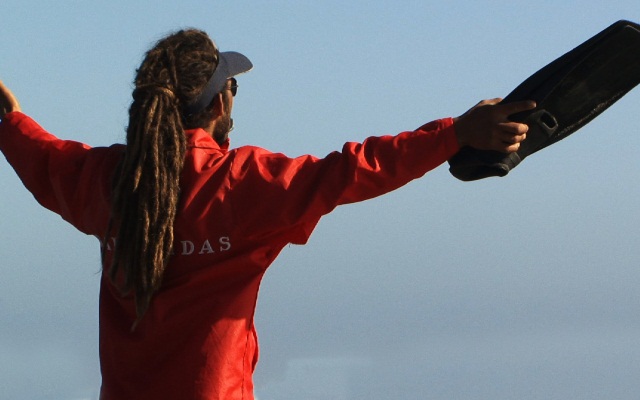 THE LIFEGUARD
Chile’s Maite Alberdi achieves a strikingly naturalistic feel with her debut film, which follows Mauricio, a dreadlocked young lifeguard, over a brief few days on duty. No nonsense, he performs all of his duties to the letter, and takes issue with Jean Pierre, a co-worker who doesn’t measure up in his estimation, but was nevertheless recently awarded as best lifeguard. In turn, Jean Pierre finds Mauricio wanting, noting that, for a lifeguard, he never even goes in the water. Against this backdrop of unusual office politics, Alberdi further brings their workplace to life through almost fiction-like scenes involving beachgoers who don’t always want to heed the rules.
TOWNSHIP TO THE STAGE
Stand up comedy is still something of a novelty in South Africa, but comic Trevor Noah seems to be even more of a novelty than his chosen vocation. The son of a black mother and a white father, he is immediately perceived as neither – a literal misfit in a culture that for so long was defined by these categories. His humor plays on his unusual standing, and on the racial differences that once were taboo to discuss. If director David Paul Meyer’s film tries to cover too much – looking beyond Noah and his background to attempt to contextualize the veritable history of South African comedy – it nevertheless finds its saving grace in its ambitious main subject. He may be brash and perhaps even conceited, but the scenes featuring his family members – especially a very funny extended riff about his younger brother – humanize him and make for a winning portrait.
 FORTUNATE SON
As the child of Greek immigrants myself, Tony Asimakopoulos’ personal reflection on his relationship with his own parents struck several chords, especially in the form of his mother – an apparent doppelgänger of my mom and every other Greek mom in the world. The film is a meditation on the filmmaker’s life, which has been plagued by self-doubt, anger, depression, and drug abuse as illustrated through clips of his old student shorts. Now, on the cusp of happiness with his fianceé, Tony takes stock of the missteps he’s made, and of the complicated relationship he has as the son of immigrants, and what patterns of dysfunction he’s learned from them. While I often take issue with films like this, which can too easily slide into self-indulgence, Tony’s self-effacement keeps the doc from tipping over the edge, and creates a convincing and often touching portrait of family ties.

 what (not) to doc