
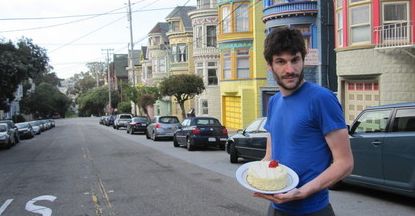
 Screening at NYC’s Harlem Stage tomorrow, Friday, December 7: (A)SEXUAL
Angela Tucker’s film on the dawning of a new identity-based movement had its premiere at Frameline this Summer. It went on to screen at NewFest, Seattle LGBT, and the New Orleans Film Festival.
Last year, I profiled Tucker’s project while it was still in production (and before she finally settled on its (suggested-by-me) title). I had the opportunity to watch the completed film at NewFest back in July, though I’ve yet to write about it again here until now. In many ways, launching the film on the LGBT film circuit makes a lot of sense – it’s very much a film about sexuality and identity, two concepts that are often at the core of LGBT films. The difference in Tucker’s film, of course, is that her subjects’ identities are not defined by the gender they’re sexually attracted to, but instead by not being sexually attracted to anyone. As the film asks, in a culture where sex is everywhere, how does the 1% of the population who are asexual fit in? The film benefits from focusing on the asexuality movement’s poster child, the handsome and charismatic David Jay, who came out to his parents as asexual more than a decade ago. While his attempts at navigating intimate relationships without sexual attraction might exasperate some viewers – why does everything have to be so complicated that it needs a literal flowchart? – his outspoken personality engenders fascinating dialogue and contemplation about concepts we all too easily take for granted. In watching the film, I was reminded of the first time I heard gender theorist Kate Bornstein discuss her own transition indepth, an experience that certainly shifted some of my own paradigms about gender, sexuality, identity, and attraction. Beyond this kind of confrontation with societal assumptions, what also makes Tucker’s film fascinating is that she’s essentially documenting the beginning of an identity in its first years. As the Internet helps to bring together individuals who have always thought they were unique, they’re only now organizing public gatherings and events to put a face to the concept of asexuality – and Tucker is there, capturing their anxiety and excitement, as well as the confusion and sometimes, bizarrely, the hostility of those confronted by their existence.

 what (not) to doc