
With the transformative threat of industry and climate change on their horizon, an Arctic island people try to maintain their traditional way of life.
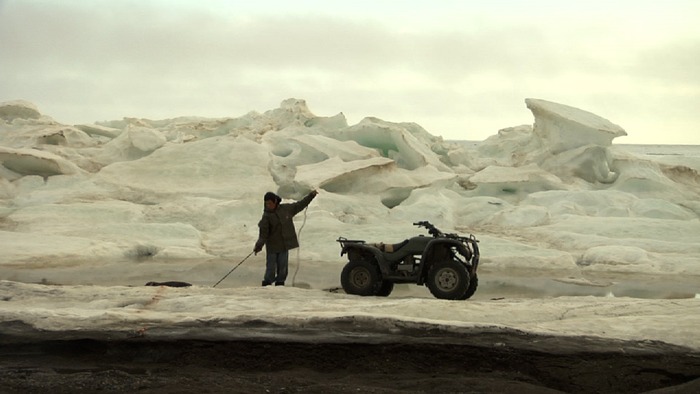 Situated more than a hundred miles above the Arctic Circle, Alaska’s Kivalina is home to 386 people, Inupiat natives who have lived on the barrier island for generations. Bearing the brunt of climate change, the island is vanishing, losing ground to sea wave erosion, and forcing its people to plan a costly relocation. Simultaneously, and contributory to these radical changes, as claimed in the island’s lawsuit against ExxonMobil and other industrial interests, is the exploitation of their surrounding natural resources and the pollution that has resulted. Against this backdrop, and over the course of five years, director Gina Abatemarco has documented the people caught in the middle. Taking an intimate, observational approach, the film seeks to reveal the everyday lives of the Kivalina people as they contend with these extraordinary developments that threaten their very future – a harbinger of a similar fate facing other populations around the world.
Abatemarco has reached half of her $25,000 Kickstarter goal for post-production. With just under two weeks left in the campaign, there’s still time to help her finish the film.
I’ve been aware of this project for a number of years, and am happy to learn it has recently received support from Vision Maker Media that will help it reach audiences via public television. While the environmental aspects of Kivalina’s story are key to engaging a broad base of interest and support for the film, allowing viewers to connect the dots between the situation faced by a few hundred people in the Arctic and the potential for the same thing to happen at countless additional spots around the globe, Abatemarco wisely locates the heart of her film in her subjects, the Inupiat people, rather than focus expressly on the “big issue” of climate change. Opening a window into their world, the film promises to give them a voice, engender identification and support for their struggles, and, most bitttersweet, capture what may very well be some of the last days of the community living on Kivalina.
Note: If you have a feature documentary currently in production or post-production and would like to be considered for an In the Works profile, tell me about it here.

 what (not) to doc