
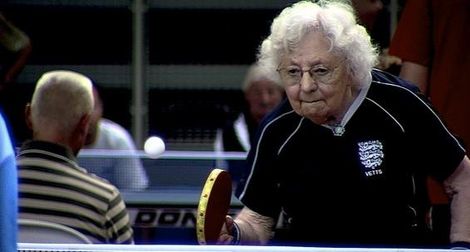
 Coming to theatres via Cinedigm’s Docurama Festival initiative today, Tuesday, May 28: PING PONG
Hugh Hartford’s look at the over-80s ping pong set debuted at Hot Docs last year. Its fest circuit has included Sheffield, DOC NYC, Palm Springs, DMZ Docs, Warsaw, Mumbai, Vancouver, and Miami. The film is part of Cinedigm’s new seven-film program bringing feature documentaries to theatres weekly in up to fifteen US markets, including NYC, LA, Pasadena, Encino, San Diego, Palm Desert, Austin, San Antonio, Phoenix, Cleveland, Columbus, Pittsburgh, Hartford, New Haven, Ithaca, Richmond, and Helena. The films are also available for additional theatrical-on-demand screenings via Tugg. In NYC, Cinema Village will screen the doc today, Thursday, and Saturday.
Putting a little top spin on the conventions of the competition doc subgenre, Hartford profiles table tennis champion contenders – but the difference here is that they’re all seniors, competing in the World Over 80s Championships in Inner Mongolia, China. Moving at a fairly brisk pace, the eight subjects are introduced, which include two British men, one whose health has taken a turn for the worse in the months following the competition; two German ladies, including the reigning world champion; a Swede who has never taken home the gold; a fiercely competitive Texan woman from Austria who was a member of the French Resistance in WWII; an Aussie woman, who, at 101, is the oldest player in the world; and a Chinese man. The last two are so quickly eliminated from the competition that it frankly seems they were only featured for a bit of added age and racial diversity – though Dorothy, the Aussie, does get to enjoy the rock star treatment in one brief scene as she is swamped with admirers. As each round goes by, consecutive players are eliminated until only the top male and top female players remain from the doc’s core subjects. Hartford keeps the focus largely on the competition, only occasionally fleshing out his characters in their home settings with observations from their families, some old photos, or a tour of their nursing homes. While this leads to only brief character sketches versus a deeper sense of each protagonist, this isn’t necessarily a bad thing – these older men and women become a great deal more feisty in the competitive setting, demonstrating how they’re energized by both game play and the social aspect of the sport.

 what (not) to doc