
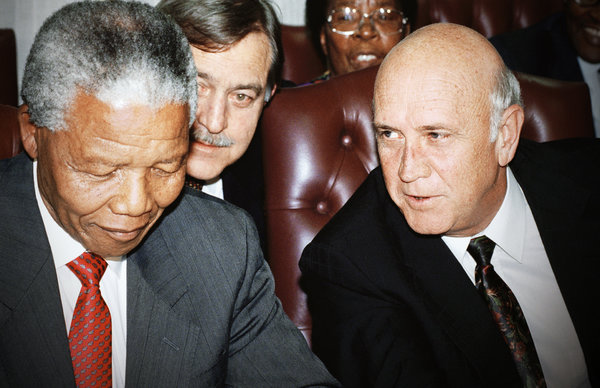
 Coming to theatres today, Friday, February 6: THE OTHER MAN: FW DE KLERK AND THE END OF APARTHEID
Nicolas Rossier’s portrait of the last white leader of South Africa made its debut at Durban last year. It went on to screen at IDFA this past November.
While Nelson Mandela and his role in the foundation of post-apartheid South Africa has been the subject of numerous documentaries, less attention has been paid to FW de Klerk, the nation’s president who oversaw the dismantling of the racist policy, and who instituted sweeping changes including Mandela’s release from prison. Rossier’s film aims to unpack de Klerk’s complex legacy, exploring, essentially, a leader who actively worked to bring about his own reign – one who ultimately publicly spoke out against the policy of apartheid, even if he disturbingly preferred the disingenuous term “separate development.” While the director benefits from direct access to the former president, with candid interviews offering some insight into de Klerk’s often pragmatic decisions, the most provocative aspects of the film emerge from archival footage – chiefly the signal of the turnover of power when Mandela publicly questioned de Klerk’s honesty, de Klerk’s decision to have Mandela address the nation after a violent racial massacre instead of himself in hopes of defusing a potential nationwide powderkeg, and the former leader’s testimony at the Truth and Reconciliation Commission, in which he disavowed knowledge of assassination and violence against ANC leaders. Particularly in showcasing numerous critics who express skepticism or absolute disbelief of this latter claim, Rossier demonstrates a willingness to eschew hagiography, even if it seems his ultimate goal is to bolster the idea that de Klerk deserves more praise than he’s typically received for his pivotal role in partnering with Mandela to save South Africa from civil war and global sanctions by abandoning a repressive policy once embraced by his political party’s leadership.

 what (not) to doc