 Festival:
The 70th Berlinale
Dates:
February 20-March 1
About:
Germany’s pre-eminent cinema event, the first organized by new artistic director Carlo Chatrian and executive director Mariette Rissenbeek, is notably slimmer than in past years, presenting approximately 170 new features, of which just over 50 are nonfiction.
THE AMERICAN SECTOR
The pared down Competition, now 18 titles, continues essentially to ignore documentaries, represented here by just a single title – Rithy Panh’s
IRRADIATED, focused on individuals who have survived wartime exposure to radiation. Nonfiction fares better in the Berlinale Special section, making up more than a third of the strand, with work including Courtney Stephens and Pacho Velez’s
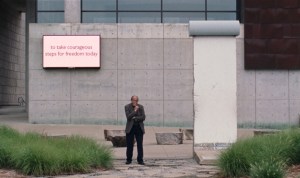
THE AMERICAN SECTOR, about the remnants of the Berlin Wall now held by American collectors and institutions; Vanessa Lapa’s
SPEER GOES TO HOLLYWOOD, on how high-ranking Nazi Albert Speer was able to rewrite his past; Jóhann Jóhannsson’s
LAST AND FIRST MEN, which combines sci-fi with Tito era Yugoslavian architecture; and Ulrike Ottinger’s
PARIS CALLIGRAMMES, an exploration of the German filmmaker’s connection to Paris.
LITTLE GIRL
More than a dozen documentaries appear in Panorama, including Karim Aïnouz’s
NARDJES A, a portrait of a young Algerian political activist; Sébastien Lifshitz’s
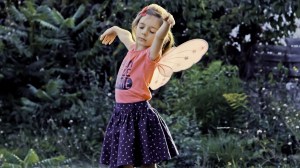
LITTLE GIRL, about an eight-year-old who wants to express her true gender identity; Lia Hietala and Hannah Reinikainen’s
ALWAYS AMBER, which follows a gender queer teenager through their transition; Andrey Gryazev’s
THE FOUNDATION PIT, a snapshot of Russia composed of found footage citizen-made videos appealing to Putin; Lei Yuan Bin’s
I DREAM OF SINGAPORE, about the struggles of Bangladeshi migrant workers in Singapore; and Fernando Segtowick’s
AMAZON MIRROR, which explores the destructive exploitation of Brazil’s Amazon region for a hydroelectric plant.

DIVINELY EVIL
Nonfiction or hybrid work dominates in the more experimental Forum section, which presents such work as: Radu Jude and Adrian Cioflâncă’s
THE EXIT OF THE TRAINS, which bears witness to a Romanian-led pogrom against the Jewish residents of Iasi in 1941; James Benning’s
MAGGIE’S FARM, a portrait of the California Institute of the Arts; Paloma Sermon-Daï’s
PETIT SAMEDI, about the relationship between a heroin addict trying to get clean and his mother; Gustavo Vinagre’s
DIVINELY EVIL, a profile of Brazil’s septuagenarian queen of SM literature; Luca Ferri’s
THE HOUSE OF LOVE, an intimate visit with a sex worker in her Milan apartment; Lynne Siefert’s
GENERATIONS, which captures America’s coal power plants; Clarissa Thieme’s
WHAT REMAINS/RE-VISITED, in which the filmmaker revisits sites of war crimes in Bosnia and Herzegovina after a decade; and The Living and the Dead Ensemble’s
OUVERTURES, an experimental exploration of the 1791 Haitian revolution through the restaging of a play about rebellion leader Toussaint Louverture.
GUNDA
Additional nonfiction work appears in new section Encounters, represented by Victor Kossakovsky’s
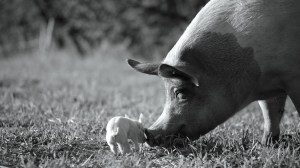
GUNDA, a dialogue-free portrait of a pig and other farm animals; and Catarina Vasconcelos’
THE METAMORPHOSIS OF BIRDS, a personal diary film about the filmmaker’s family; in the youth-focused Generations, with projects like Lin Sternal’s
PERRO, about an indigenous community in Nicaragua facing forced displacement due to a canal construction project; and Polina Gumiela’s
BLUE EYES AND COLORFUL MY DRESS, which views the world through a three-year-old girl’s experiences of summer; and in the German filmmaker showcase Perspektive Deutsches Kino, with Natalija Yefimkina’s
GARAGE PEOPLE, which explores life in Russia’s Far North through individualized garages; and Jonas Heldt’s
AUTOMOTIVE, which profiles two Audi employees in an era of increasing automation.


 what (not) to doc