

RITA MORENO: JUST A GIRL WHO DECIDED TO GO FOR IT
Mariem Pérez Riera profiles the pioneering, EGOT-winning star of stage and screen.
Festival Section:
US Documentary Competition
RITA MORENO: JUST A GIRL WHO DECIDED TO GO FOR IT
Mariem Pérez Riera profiles the pioneering, EGOT-winning star of stage and screen.
Festival Section:
US Documentary Competition
Filed under Documentary, Film, Film Festivals, Recommendations, Sundance

Coming to VOD today, Friday, January 8:
THE DISSIDENT
Director:
Bryan Fogel
World Premiere:
Sundance 2020
Select Festivals:
DOC NYC, Hot Docs, Zurich, Aspen, Savannah, Stockholm
About:
An investigation of the shocking murder of journalist Jamal Khashoggi.
My pre-Sundance profile of the doc may be found here.
Filed under Documentary, Film, Film Festivals, Recommendations, Releases, Sundance

REBEL HEARTS
Pedro Kos reveals the story of an unlikely group of radically progressive nuns.
Festival Section:
US Documentary Competition
Filed under Documentary, Film, Film Festivals, Recommendations, Sundance

HOMEROOM
Peter Nicks profiles an Oakland high school class in the tumultuous year of COVID and a widespread reckoning of racial injustice.
Festival Section:
US Documentary Competition
Filed under Documentary, Film, Film Festivals, Recommendations, Sundance

Coming to select theatres and to virtual cinemas tomorrow, Friday, January 8:
THE REASON I JUMP
Director:
Jerry Rothwell
World Premiere:
Sundance 2020
Select Festivals:
DOC NYC, Hot Docs, AFI Docs, Docs Against Gravity, London, ReelAbilities
About:
A profile of non-verbal autistic young people, based on the New York Times bestseller by Naoki Higashida.
My pre-Sundance profile of the doc may be found here.
Filed under Documentary, Film, Film Festivals, Recommendations, Releases, Sundance

Coming to virtual cinemas tomorrow, Friday, January 8:
BEAUTIFUL SOMETHING LEFT BEHIND
Director:
Katrine Philp
World Premiere:
SXSW 2020 (unscreened)
Select Festivals:
DOC NYC, Camden, Reykjavík, Nordisk Panorama, Haifa, Bergen, Montclair
About:
An intimate child’s eye view of a counseling center which focuses on mourning the loss of loved ones.
The film screened as part of DOC NYC, for which our program notes read:
New Jersey’s Good Grief counseling center offers a holistic approach to mourning. Filmmaker Katrine Philp presents viewers with a child’s perspective of its programs, offering an affectionate and intimate look at the lives of several children who have recently lost their parents and must navigate their grief by embracing sadness with honesty, bravery, humor, and love. The result is an enlightening film in which the students become our teachers in finding better ways of coping with loss.
Filed under Documentary, Film, Recommendations, Releases

CUSP
Parker Hill and Isabel Bethencourt intimately chronicle the lives of three teenage girls in a Texas military town.
Festival Section:
US Documentary Competition
Filed under Documentary, Film, Film Festivals, Recommendations, Sundance
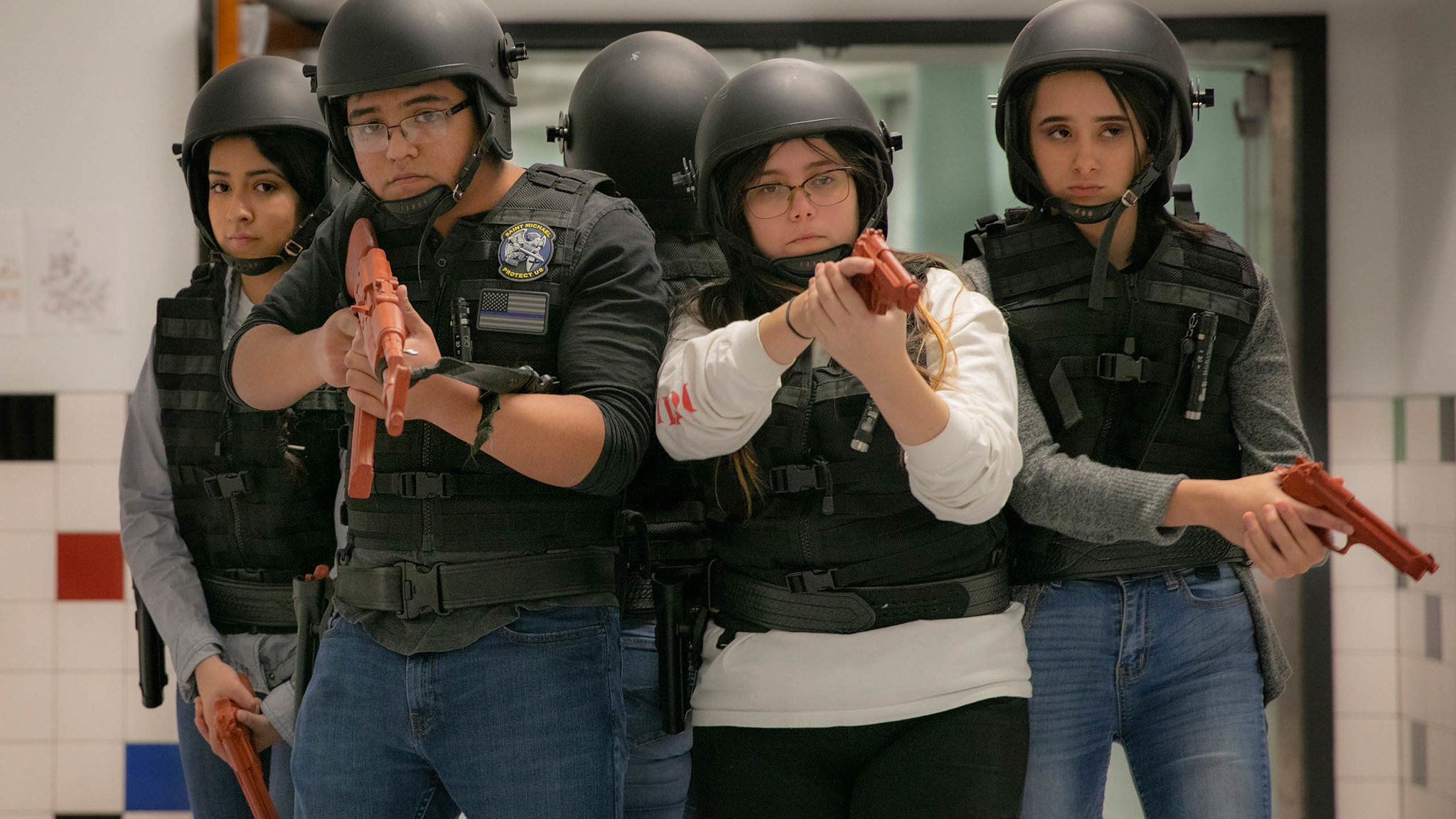
AT THE READY
Maisie Crow profiles Latinx teens in El Paso as they contemplate careers in border patrol and law enforcement against the backdrop of increasing xenophobia.
Festival Section:
US Documentary Competition
Filed under Documentary, Film, Film Festivals, Recommendations, Sundance

Coming to PBS’s Frontline this Friday, January 8:
A THOUSAND CUTS
Director:
Ramona Diaz
World Premiere:
Sundance 2020
Select Festivals:
Hot Docs, SXSW, AFI Docs, Full Frame, San Francisco, Cleveland
About:
A chilling look at the assault on fundamental democratic freedoms in the Philippines.
My pre-Sundance profile of the doc may be found here.
Filed under Documentary, Film, Film Festivals, Recommendations, Releases, Sundance

ALL LIGHT, EVERYWHERE
Theo Anthony interrogates the idea of objectivity through the shared histories of cameras, weapons, policing, and justice.
Festival Section:
US Documentary Competition
Filed under Documentary, Film, Film Festivals, Recommendations, Sundance


