Basil Tsiokos is a Senior Programmer for the Sundance Film Festival, focusing on nonfiction features. He was most recently with DOC NYC for nearly a decade, where he served as Director of Programming since 2014, and with the Nantucket Film Festival as its Film Program Director. Prior to those positions, Basil was the longtime Artistic and Executive Director of NewFest. He has been affiliated with Sundance since 2005 as a Programming Associate. Basil serves on the feature nominating committees for the International Documentary Association Awards and Cinema Eye Honors. He has written about documentaries daily since 2010 on what (not) to doc. Basil holds a Masters degree from New York University and two undergraduate degrees from Stanford University.
The 37th Sundance Film Festival takes place later this month, running January 28-February 3 both online and via satellite screens, with a lineup consisting of 71 features, 50 shorts, 4 episodics, and 14 exhibitions, performances, and VR experiences.
Once again, as I’ve done since 2011’s festival, I’ll profile each of the more than 30 feature and long-form episodic documentaries in advance of the festival, beginning tomorrow.
Please note: These are not reviews. As a Documentary Programming Associate for Sundance, I recommend every film in the 2021 lineup. These profiles instead provide background about the teams behind this year’s docs in anticipation of the festival and the films’ later release. For a sample, check out last year’s series, which began here.
World Premiere: International Ocean Film Festival (2018)
Select Festivals: San Diego, Santa Cruz, Long Beach, Maui, Honoulu Surf, Worldfest Houston
About: Profiles of nine girls and women who are connected to the ocean, mostly through surfing.
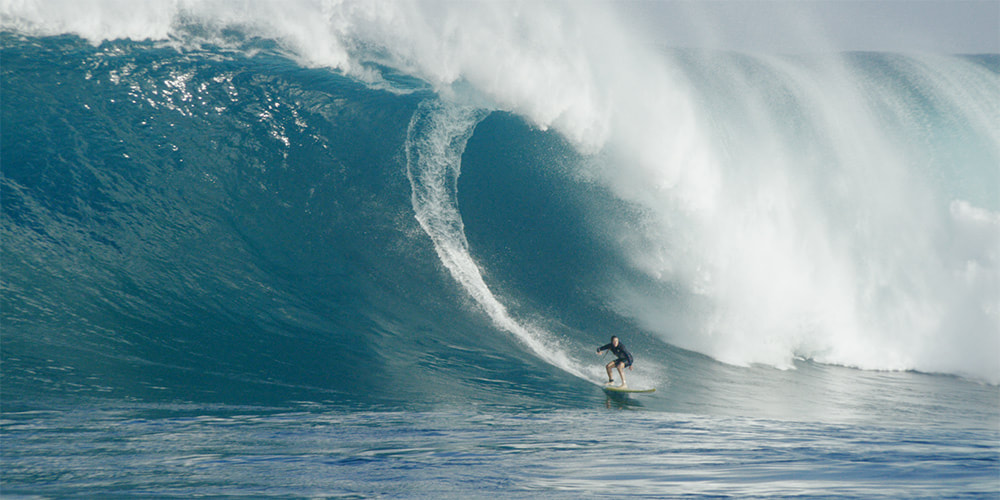
Filmmaker Inna Blokhina attempts to construct a unified film through a series of unconnected vignettes about various women and how they relate to the ocean, threading the five-year story of Cinta Hansel, a young Balinese girl who is fulfilling her American father’s unrealized dreams of surfing success, throughout the doc. While the intent seems to be a metaphorical trajectory of women’s involvement with the ocean from girlhood to senescence, this doesn’t really come across successfully, given that most of the subjects are within the same age range. Other than Cinta, the subjects, profiled in overly slick sequences with excessive music-video montages, include a young professional surfer who is the daughter of a Hawaiian surfing legend, a shark conservationist who educates the public about the misunderstood species through shark diving tours, a cliff diver who was inspired by her gymnast mother, a ballet dancer who likes to free-dive, an acclaimed barrel surfer, a big wave surfer, the surfing mother of a deceased surf champion, and Sylvia Earle, the noted marine biologist. These profiles are unfortunately too brief to be compelling, and their cumulative effect bears diminishing returns, making this of limited interest to all but die-hard surf film fans.
About: A collection of recently unearthed letters offer a fascinating glimpse at the underground gay drag scene of 1950s-’60s NYC.
In 2014, a box of letters discovered in a Los Angeles storage unit, all addressed to the mysterious “Reno,” sets filmmakers Michael Seligman and Jennifer Tiexiera on a journey to track down the circle of friends behind the communications, all part of the pre-Stonewall drag scene in NYC. Excerpts from the colorful missives are read throughout the resulting film, bringing to life the vibrant but often dangerous milieu as experienced by men with such aliases as Claudia, Daphne, and Josephine Baker, not to mention the distinctive slang of that era’s gay subculture, while present-day interviews with the letter writers as well as queer historians offer both infectious humor and poignant reflection. While there’s a looseness to its structure, and a too abrupt transition from the subjects’ heyday to the devastation of AIDS, eliding the transformative two decades in between, the film is nonetheless incredibly engaging and an important excavation of queer history from a period when primary sources were often hidden, if not destroyed.
Select Festivals: Hot Docs, AFI Docs, CAAMFest, Los Angeles Asian Pacific
About: Cheerleaders face off against the NFL for fair wages.
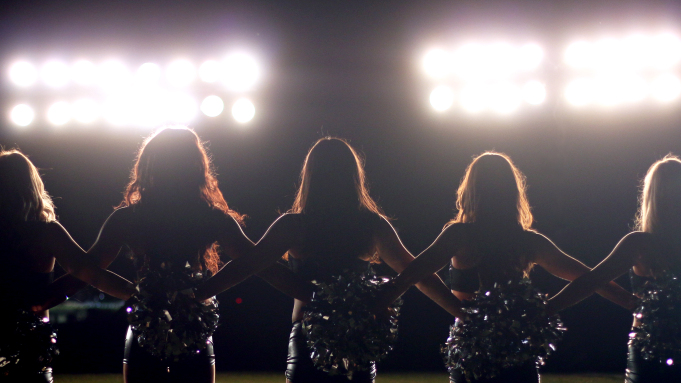
Football is a lucrative industry, but the compensation provided to scores of cheerleaders bolstering the game doesn’t come anywhere close to reflecting that reality. While some teams have strictly volunteer squads, even those with salaries are typically paid far below minimum wage, often going without pay for months at a time, and responsible for covering their own costs, including travel, with penalties incurred for absences. Filmmaker Yu Gu profiles Oakland Raiderette Lacy Thibodeaux-Fields and Buffalo Jills’ Maria Pinzone, two former cheerleaders who decide that enough is enough and take to the courts to argue against this exploitation and wage theft. While it would seem a given that individuals should be fairly compensated for their work, entrenched sexism instead leads to a backlash, not only from stereotypical chauvinists too eager to dismiss the work of women, but also from female fans and, surprisingly, past and current cheerleaders, who parrot an outdated, self-defeating belief that women should just feel lucky to be given the opportunity to participate in the first place. Though Gu struggles to maintain focus on the core issues of her film, keeping extraneous material even in the broadcast cutdown, she succeeds in spotlighting inequity and sexism in sports, and the impact of Thibodeaux-Fields and Pinzone’s determination against the backdrop of the emerging #MeToo and Time’s Up movements.