Select Festivals: Rotterdam, New York, Barcelona, Monterrey, Guanajuato, RIDM
About: Home movies reveal a couple’s life in the 1950.
Ostensibly, Nuria Giménez’s film tells the story of Vivian Barrett and her husband Leon – plus her lover, Leo – through glorious technicolor home movies Leon shot mid-century, largely silent save for the stray sound effect, and accompanied by on-screen text from Vivian’s private diary. It’s only at the end of the film that the viewer sees the curious credits noting that Vivian and Leon were played by Isle G Ringier and Frank A Lorang, and that Lorang actually shot the footage. It turns out that the “documentary” that preceded was constructed, and neither Vivian nor Leon – not to mention Leo, and Vivian’s oft-quoted favorite author/guru, Paravadin Kanvar Kharjappali – existed. The footage was from and featured the director’s grandparents, instead (though this relationship is not explained within the film itself), and the entire film is an exercise in imaginary biography. Giménez’s use of silence and on-screen text force the viewers attention, encouraging easy belief in the lie of the narrative. While the deceit is so subtle and innocuous as to beg the question of ultimate intent, the film is thoughtful and unique enough to justify the viewer’s time.
Select Festivals: DOXA, Encounters, Durban, CinemAfrica, NY African Diaspora
About: The director seeks to unearth the story of an aunt she’s never heard of before.
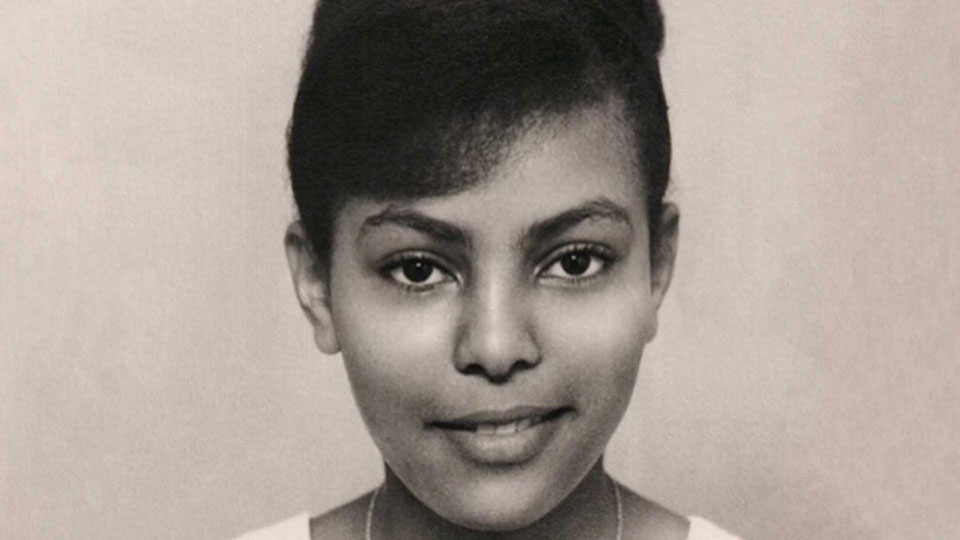
After Tamara Mariam Dawit, the daughter of an Ethiopian man and Canadian woman, moves to her father’s homeland to reconnect with her father’s side of the family, she learns of the existence of a long-absent aunt, Selamawit, known affectionately as Sally. While Sally’s sisters are surprised by Dawit’s claims that they’ve never spoken about Sally in front of her, it’s clear that their lost sister’s story is a painful one. Interviewing each of her aunts, as well as other family friends, Dawit delves not only into Sally’s story, but that of Ethiopia’s tumultuous history. Though presented as something of a mystery, Sally’s story is well known, up to a point, by her family, the offspring of a respected diplomat for Emperor Haile Selassie’s government. Sally was involved in the student movement that opposed Selassie as well as the more radical Ethiopian People’s Revolutionary Party that was targeted as an enemy by the repressive military junta that forced the emperor from power in 1974. Sally went into hiding, but the family eventually learned of her death, though they never knew the exact circumstances. To her credit, the filmmaker’s investigation uncovers this missing part of the story, bringing closure to Sally’s sisters. While Dawit’s filmmaking is very basic and conventional, and especially marred by slow, unengaging, and too present expository narration, she does manage to broaden an intimate personal story through a wider consideration of Ethiopia’s fraught history.
Select Festivals: DOC NYC, New Orleans, Human Rights Watch, BlackStar, Los Angeles Asian Pacific, San Diego Asian, Montclair, Hot Springs Doc, Milwaukee, Ashland,
About: A death in a Brooklyn housing project sets off a complex fight for justice by two marginalized communities.
The film screened as part of DOC NYC, for which our program notes read: In 2014, Peter Liang, a Chinese-American police officer, shot and killed an innocent, unarmed Black man named Akai Gurley in the dark stairwell of a Brooklyn housing project. In the midst of high racial tension surrounding police conduct, Liang becomes the first NYPD officer to receive a guilty verdict in such a case in over a decade. The highly publicized incident polarizes New York’s Asian and African American communities in this insightful look into the complexities of police reform.
About: The offspring of the same sperm donor form an alternative family when they discover each other’s existence.
The subjects of director Michael Rothman’s affectionate film were all conceived via sperm donated by the same individual, the anonymous and prolific donor 5114, at a cryobank in California. Using easily accessible DNA information and the connectivity of social media, these half-siblings found one another – and keep finding more – and start to develop an unusual bond. Over the course of eight years, Rothman profiles the photogenic kids and their moms, and follows them as they organize meet-ups, discover similarities and differences, and consider their unusual connection through donor 5114. As time passes, the first of the half-siblings turns 18, and thus is legally able to attempt contact with the donor through the sperm bank, leading to further contemplation about nature vs nurture. As a whole, the film is strengthened by its longitudinal approach, moving from a simply curious story to something more measured and thoughtful.







 what (not) to doc