
 The Documentary Premieres section is the perfect fit for acclaimed returning director Steve James and his newest film, THE INTERRUPTERS, a masterful look at what one organization is doing to bring an end to violence in a beleaguered Chicago.
Category Archives: Film Festivals
2011 Sundance Docs in Focus: THE INTERRUPTERS
Filed under Documentary, Film, Film Festivals, Recommendations, Sundance
2011 Sundance Docs in Focus: REBIRTH
 Jim Whitaker’s multiyear portrait of emotional and physical rebuilding following 9/11, REBIRTH, screens in this year’s new Documentary Premieres section.
Filed under Documentary, Film, Film Festivals, Recommendations, Sundance
2011 Sundance Docs in Focus: BOBBY FISCHER AGAINST THE WORLD
 Sundance alumna Liz Garbus is appropriately featured in Documentary Premieres with her newest film, BOBBY FISCHER AGAINST THE WORLD, a comprehensive examination of the renowned chess champion.
Filed under Documentary, Film, Film Festivals, Recommendations, Sundance
2011 Sundance Docs in Focus: THESE AMAZING SHADOWS
 Next in Documentary Premieres is Paul Mariano and Kurt Norton’s THESE AMAZING SHADOWS, on the origins and preservation work of the National Film Registry.
Filed under Documentary, Film, Film Festivals, Recommendations, Sundance
2011 Sundance Docs in Focus: BECOMING CHAZ
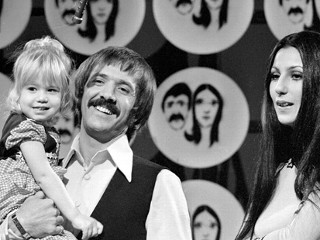 My doc-by-doc look at this year’s Sundance line-up shifts to the new Documentary Premieres section, an addition to the longstanding Premieres category, and featuring the work of established and accomplished documentarians or own bigger subjects. First up is the newest doc from multiple Sundance alumni Fenton Bailey and Randy Barbato, BECOMING CHAZ, following the former Chastity Bono’s path to his new public identity as a transgender man.
Filed under Documentary, Film, Film Festivals, Recommendations, Sundance
2011 Sundance Docs in Focus: SENNA
 Wrapping up this year’s World Cinema Competition is Asif Kapadia’s SENNA, from the UK, the story of the eponymous three-time Formula One world champion.
Filed under Documentary, Film, Film Festivals, Recommendations, Sundance
2011 Sundance Docs in Focus: PROJECT NIM
 Heading into the homestretch of this year’s World Cinema Competition is Academy Award-winning British director James Marsh’s portrait of the simian subject a unique 1970s scientific experiment, PROJECT NIM.
Filed under Documentary, Film, Film Festivals, Recommendations, Sundance
2011 Sundance Docs in Focus: POSITION AMONG THE STARS
 The third of three films in the World Cinema Documentary Competition that also screened at IDFA, Leonard Retel Helmrich’s POSITION AMONG THE STARS, from The Netherlands, concludes his three-film portrait of a poor Indonesian family and how they are coping with modernization.
Filed under Documentary, Film, Film Festivals, Recommendations, Sundance
2011 Sundance Docs in Focus: SHUT UP LITTLE MAN! AN AUDIO MISADVENTURE
 The World Cinema Documentary Competition heads to San Francisco, care of Australian director Matthew Bate, with his SHUT UP LITTLE MAN! AN AUDIO MISADVENTURE, the behind-the-scenes story of a worldwide viral audio cult phenomenon.
Filed under Documentary, Film, Film Festivals, Recommendations, Sundance
2011 Sundance Docs in Focus: FAMILY PORTRAIT IN BLACK & WHITE
 The next film in the World Cinema Documentary Competition comes from Canada – Julia Ivanova’s exploration of an unusually large Ukrainian foster family, FAMILY PORTRAIT IN BLACK & WHITE.
Filed under Documentary, Film, Film Festivals, Recommendations, Sundance


