
 2013 marks the sweet sixteen for the Montreal International Documentary Festival, better known to our French-speaking Northern neighbors as RIDM (Anglophones, that stands for Rencontres internationales du documentaire de Montréal), opening tonight, Wednesday, November 13 with Sundance and Toronto audience award winner THE SQUARE. Closing on Sunday, November 24 with director Annie St-Pierre’s local interest title FERMIÉRES, about Quebec volunteer farm women’s groups, the festival will screen over sixty new and recent feature documentaries, as well as additional retrospectives (Marcel Ophüls and Harvard’s Sensory Ethnography Lab), transmedia projects, and shorts. I’ve never attended, unfortunately, and the simultaneously running DOC NYC will be keeping me plenty busy, but if I were in beautiful Montreal, the following newer films would be highest on my list:
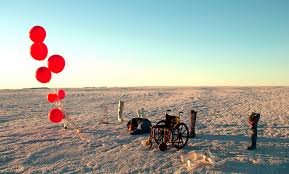 RIDM holds four separate competitions – one for shorts, and three for features and mid-lengths. Among the dozen International Features titles are several I’ve noted on this site before, including Susanna Helke’s AMERICAN VAGABOND and Gonçalo Tocha’s THE MOTHER AND THE SEA; and from the International Medium-Lengths, films like Dora Garcia’s THE JOYCEAN SOCIETY and Valéry Rosier’s SILENCE RADIO. Several of the eleven Canadian Features competition are unfamiliar to me, with the most intriguing being: John Walker’s ARCTIC DEFENDERS, about the indigenous struggle that led to the creation of Nunavut; Dominic Gagnon’s HOAX_CANULAR, on the end of the world as envisioned by youth-created amateur online videos; Julie Perron’s LE SEMEUR, about a man who preserves seeds to ensure agricultural biodiversity and history; and Laura Bari’s ARIEL (pictured), a decade-long quest to design new legs for the filmmaker’s paraplegic brother.
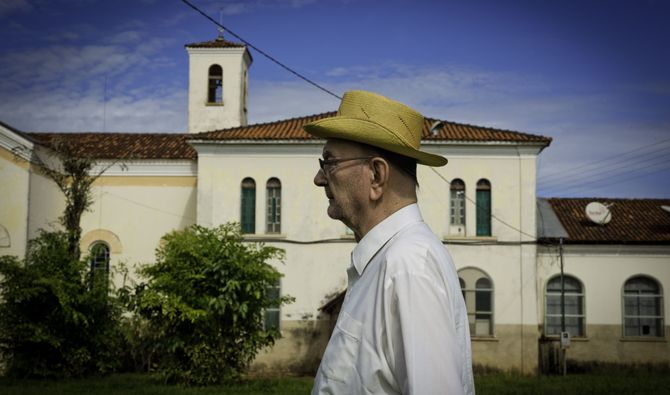 The festival’s non-competitive Panorama includes several separate sections, including a collection of auteur films and festival favorites in Special Presentations; music docs in Beat Dox; transmedia projects in Docs 2.0; the current affair-driven Horizons, including Dieudo Hamadi’s ATALAKU, about paid campaigners for Congolese elections, and Alessandra Celesia’s AN ITALIAN MIRAGE, following Italians seeking jobs in remote Alaska; the perception-challenging Against the Grain, which includes Mariam Abu-Khaled, Udi Aloni, and Batoul Taleb’s ART/VIOLENCE, looking at Palestine’s Freedom Theatre in the wake of its founder’s assassination, and Tiago Campos’ MASTER AND DIVINO (pictured), about a missionary and an indigenous Amazonian, both with a passion for filmmaking; and the environmentally-focused Territories, such as Amy Miller’s NO LAND NO FOOD NO LIFE, on the devastating local impact of industrial agricultural, and Jean-Nicolas Orhon’s BIDONVILLE: ARCHITECTURES DE LA VILLE FUTURE, a rumination on shantytowns around the world.

 what (not) to doc