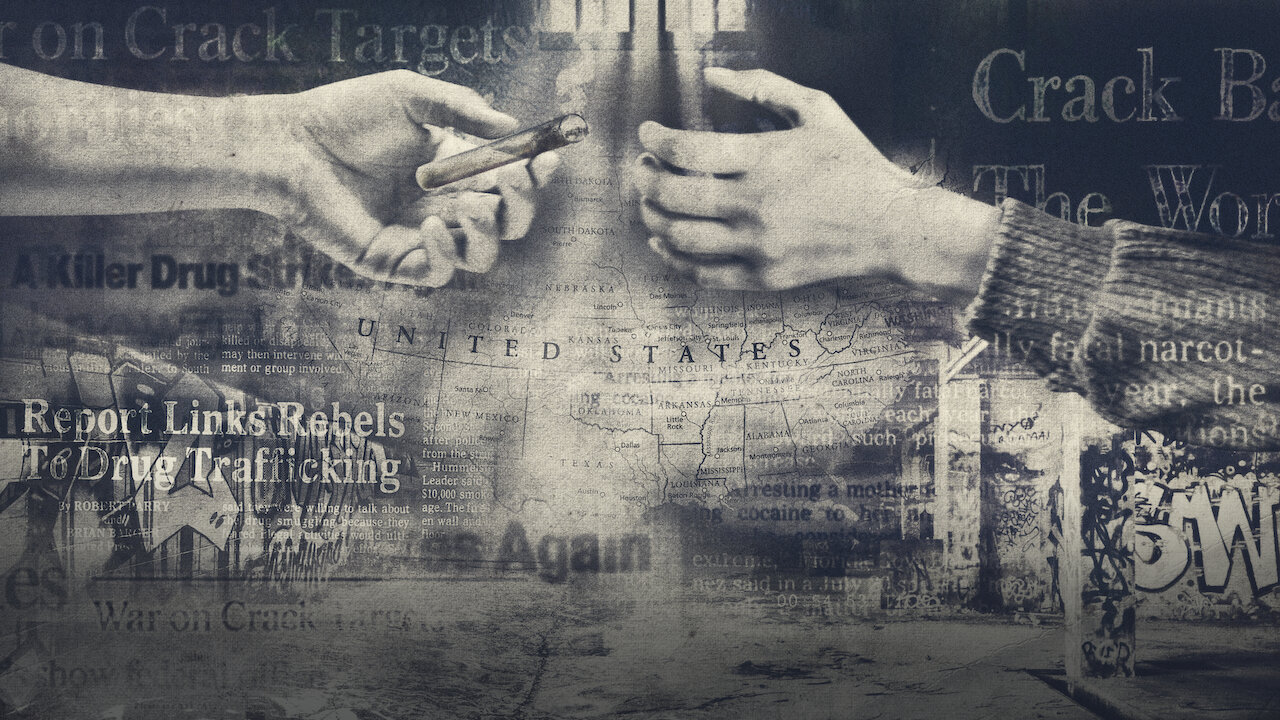
About: A provocative investigation of the crack epidemic of the 1980s-’90s.
America’s ill-conceived and ineffective “war on drugs” ramped up under Ronald Reagan and George HW Bush in the 1980s, largely as a response to crack. Draconian laws punished dealer and user alike, resulting in mass incarceration, disproportionately affecting people of color and laying siege to their communities and families, with the parallel militarization of the police. While crack use was hardly limited to Black people, with some estimating that as many as two-thirds of users were actually white, law enforcement and the media largely ignored the latter, instead demonizing people of color. Acclaimed documentarian Stanley Nelson revisits the origins of the crack epidemic and explores its legacy, offering astute historical and cultural context for how and why crack emerged and became central to mainstream, racist narratives of Black criminality and the expansion of the prison industrial system.
Coming to PBS’s American Experience tonight, Monday, January 11: THE CODEBREAKER
Director: Chana Gazit
World Premiere: American Experience (January 2021)
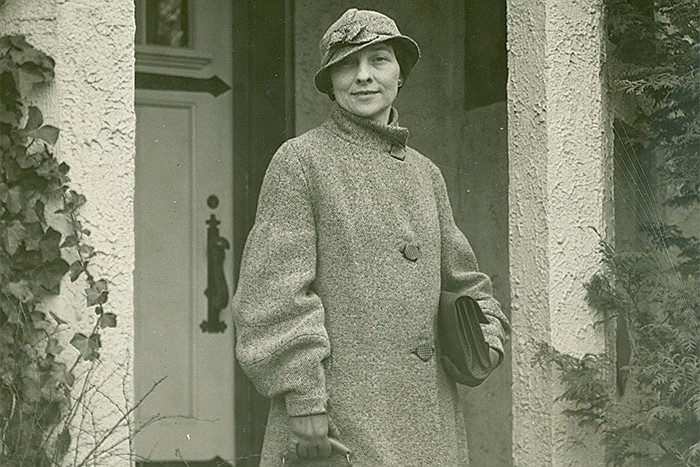
About: The recently declassified story of an unheralded female cryptanalyst who was instrumental in America’s war effort against Nazi Germany.
Elizebeth Smith Friedman would tell people that during WWII, she held an unassuming role in the US Navy. The truth would not come out until decades after her death, when classified documents would reveal the pivotal role she played as a codebreaker, responsible for foiling Nazi plans to torpedo essential supply ships and for exposing an extensive espionage ring in Latin America. As Chana Gazit’s biography reveals, Friedman was not always out of the public eye, however – she gained a fair amount of celebrity in the 1930s when she was tasked by the US Coast Guard to lead a codebreaking unit to decrypt messages used by organized crime leaders transporting alcohol during Prohibition, and later served as chief witness during the trials that followed against the gangsters. But, during WWII, in the men’s world of the military, despite her expertise in cryptanalysis, Friedman was not permitted to lead her own unit, so she was overshadowed by less experienced men, and her contributions kept strictly classified. Though she would lay the foundation for the NSA, there was no place for her postwar. While Gazit’s film follows the dry American Experience house style, it nevertheless succeeds in giving Friedman her long deserved recognition.
About: July 4, 2017, as experienced across the country.
Coordinating shoots in each US state, plus Puerto Rico, director Jared Leto takes an approach similar to Jeff Deutchman’s two election docs, 11/4/08 and 11/8/16, creating a mosaic of a single day through a series of vignettes. While the previous films were focused on presidential elections, Leto’s more broadly takes the temperature of the country on Independence Day, though not every scene explicitly references this. There is enough patriotism – or, more disturbingly, nationalism and white supremacy – on display to offer a snapshot of America less than a year into the divisive 45th president’s first term, but the film as a whole doesn’t attempt to present an explicit, overarching political message. Instead Leto and his editors offer overly brief vignettes that broadly attempt to capture America’s diversity, often creating dialogue through pointed juxtapositions. By its design, the well–produced doc was never meant to delve deeply into any single particular issue, but its survey structure nevertheless results in a disjointed and not especially satisfying watch as a whole.










 what (not) to doc