Category Archives: Film Festivals

Hot Docs Submissions Reminder

Filmmakers: The early deadline for the Hot Docs Canadian International Documentary Festival is this Friday, December 3 – the final deadline is January 14, but submit by Friday for a reduced entry fee. The 2011 fest will take place April 28-May 8, so mark your calendars now.

I’ve been able to attend Hot Docs since 2009 – covering the festival and its concurrent Forum for indieWIRE both years, and holding the international premiere of THE CANAL STREET MADAM there earlier this year.

The event, held in Toronto, ON, is fantastically managed, comprehensively and smartly programmed, and attracts a huge audience (our second screening of CSM was on a weekday morning and we had to turn away more than 50 people!). It’s the largest festival of non-fiction film in North America, and, as a result, also draws a significant industry presence – so it’s a must for documentary filmmakers to submit their work to. Among the Hot Docs coverage I’ve done are recent articles from 2010’s edition: here and here.

Leave a comment

Filed under Documentary, Film, Film Festivals, Submission Deadlines

On DVD/TV: RESTREPO

Premiering on TV Monday, November 29 at 9PM EST on National Geographic and coming to DVD on Tuesday, December 7: RESTREPO

Sebastian Junger and Tim Hetherington debuted their film at this year’s Sundance, where it claimed the US Documentary Grand Jury Prize. It was released theatrically in the Summer, and now has its TV and DVD premiere less than two weeks after the film has been shortlisted for the Academy Awards.

Junger and Hetherington gain remarkable access to the men of the US Army’s Second Platoon in this harrowing look at the Afghanistan War. Set in an outpost in the dangerous Korengal Valley named after a lost soldier, RESTREPO documents one year in the trenches, as the soldiers fight al Qaeda and the Taliban, intensely bond like only people in their position can, and deal with the uncertainty of life and death in wartime. The result is a powerful, affecting portrait, no matter one’s politics.

Leave a comment

Filed under Documentary, Film, Releases, Sundance

IDFA 2010: The FORUM in Brief

My second of two articles out of IDFA (the International Documentary Film Festival Amsterdam), focusing on the international co-production financing market, the FORUM, is now up at indieWIRE here. Doubling as an entry in iW‘s Filmmakers Toolkit, it’s also intended for filmmakers interested in learning about what makes for an effective pitch.

1 Comment

Filed under Dear Documentary Filmmakers, Documentary, Film, Film Festivals, In Brief, Recommendations

IDFA 2010: Docs in Brief

While I’m planning to post a separate wrap up on this blog after my time in Amsterdam, my initial article out of IDFA (the International Documentary Film Festival Amsterdam) is now up at indieWIRE here.

1 Comment

Filed under Documentary, Film, Film Festivals, In Brief, Recommendations

IFP: Using Festival Deadlines as Production Deadlines

The latest post in my contribution to IFP’s “Ask the Expert” blog is up, focusing on the pros and (mostly) cons of using film festival deadlines as your film’s production deadline. Take a look here.

Update: The original post seems to have gone missing from IFP’s site, so I’ve posted the article below.

Dear Filmmakers:

In my first blog post for IFP, I briefly addressed the issue of using a specific festival’s deadline as your own film’s production deadline. In this post, I’m going to expand a bit on this topic.

You have to plan out your production schedule anyway, so what’s the problem with using Sundance or Toronto’s final submission deadline as your own deadline for having a showable rough cut or even fine cut? At the basic level, there’s not necessarily anything wrong with this strategy. After all, you do have to finish your film at some time if you want to give it a chance of getting out into the world through festivals or potential distribution. Having a specific date or date range is a great motivator and helps you tackle the daunting process of editing and other post work in a tangible way. I’d frankly be concerned if you didn’t have some sense of when you were planning to be finished.

At the same time, any deadline you set for your film is ultimately an arbitrary date, and one subject to any number of delays and rescheduling both under your control and not. Barring being granted a slight extension by the festival, the submission deadline is not so flexible. As a result, some filmmakers lose sight of their own project and focus on that submission deadline as the end-all, be-all, and force themselves to come up with something, anything in time to get it in to the festival by that date. Putting the metaphorical cart before the horse, these filmmakers are convinced that they have to get into that specific festival, but they haven’t even finished their film properly to actually position it for programming.

If you follow this route, you may end up cutting corners, creating a cut of your film that looks or sounds sloppy, doesn’t make narrative or logical sense, or is missing key sequences, and yet you decide the programmers of a festival in which you desperately want to premiere should see it. If this doesn’t sound like a bad idea already, it should. You’re not doing yourself, your film, or your collaborators any favors by rushing a subpar project for the purposes of a submission deadline. While programmers, especially those at the top tier fests, are experienced at watching rough cuts and are able to see past the lack of color correction, sound mixing, or even minor missing elements to recognize the potential of the final cut, they can also tell when something they’re watching isn’t nearly ready and could have used a few more weeks, if not months, in the editing suite. Submitting with a cut that’s not there yet can lead some programmers to form a poor opinion on not only your film, but on your sense of judgement regarding your own work. If your film is rejected, and your re-apply the following year, your project may still have a chance at being selected, especially if it’s been improved and hasn’t screened elsewhere in the intervening months, but you also risk the same programmers seeing the re-submission and judging it at least partially on the first impressions they received from the first bad cut they saw.

Let’s say however, that while you rushed to get your film submitted in time, it’s such a promising project that it ends up getting selected. This can be a double-edged sword – it’s fantastic that you’ve made it into your desired festival, but now you have another one of those inflexible deadlines – the festival’s opening date – and your film is not finished. You have perhaps 6-8 weeks between selection notification and the start of the festival to wrap up all post work so that you have a final, completed film to screen at your premiere. Again, delays are inevitable, people and machinery are fallible. Anything that can go wrong likely will go wrong, at least a little bit. Do you have enough time, allotting some room for these kinds of delays, to get your project to the place you envision it needs to be before it meets the public? If you rushed to get your submission in on time, you are now having to rush even faster to get your finished film to your premiere on time. That’s a lot of pressure, and this can exacerbate even the smaller problems that may have been evident in your rough cut, creating a serious flawed final cut. You might end up with a film radically different than what you wanted, and one that ends up being unsuccessful as a result, even if it premieres at Berlin or Cannes.

I don’t mean to be all doom and gloom, but I do want to give you pause for thought. As with every aspect of your work, you should plan ahead and be realistic about what you can and can’t accomplish in a given timeframe. Create a practical timeline for all elements of post-production, including a back-up plan should you run into unforeseen delays that allows for some flexible cushioning by a week or two, just in case. By all means, use your dream festival premiere as the end point of your post, and work backwards from there to see if its feasible timewise to make it. If you’ve worked out a comfortable 26-week post schedule, and the festival is 16 weeks away, do the math. Bad idea. Don’t become too fixated on the idea that you have to premiere at a particular festival – there are other options that can serve your film just as well, if not better, depending on what kind of a film you have and what kind of exposure the festival is known for providing. On the other hand, if you are absolutely convinced that your number one choice for a festival premiere is the best for your film, you can make the difficult, but smarter, choice of waiting and submitting the next year rather than compromising on post and submitting this year with an inferior and premature version of your project. Take that extra year to hone your film into being the best that it can be, so that when you do finally get it into programmers’ hands, they will see the film you wanted them to see all along. Determine the rest of your festival strategy, beyond the premiere. If appropriate, look into sales agents and publicists who can hopefully help sell your film. Spend time on your social media marketing and other promotion to create and expand your fanbase for the project, so that there’s anticipation for its eventual premiere and, hopefully, for its distribution down the line. And, most importantly, take some time to sleep and to breathe – luxuries the other, rushed, scenario doesn’t necessarily provide the opportunity for…

ABOUT THE WRITER: Basil Tsiokos is a Programming Associate, Documentary Features for Sundance, consults with documentary filmmakers and festivals, and recently co-produced Cameron Yates’ feature documentary “The Canal Street Madam.” Follow him on Twitter @1basil1 and read his “Dear Documentary Filmmakers” advice at WhatNotToDoc.com.

5 Comments

Filed under Documentary, Film, Film Festivals, Recommendations

On DVD: COUNTDOWN TO ZERO

Coming to DVD next Tuesday, November 23: COUNTDOWN TO ZERO

Lucy Walker’s second of two docs premiering at this year’s Sundance had a limited theatrical release in the middle of the summer via Magnolia.

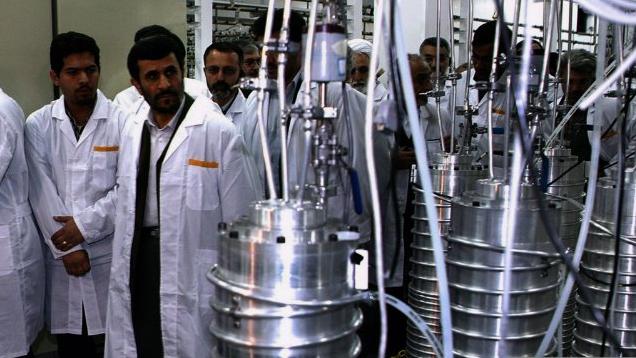
Less artful than Walker’s previous films (like WASTE LAND), COUNTDOWN TO ZERO nonetheless succeeds in drawing much-needed attention to an issue with global significance – the possibility of nuclear disaster. Investigating the present-day status of nuclear weapons, for the most part removed from the public consciousness once the USSR fell, Walker lets those in the know remind us exactly what’s at stake were something to go wrong – an accident or a use of the weapons during even a limited range war. Balancing this wake up call, and preventing it from becoming just an exercise in scaring the viewer, is the message that something can be done by world governments to make the chance of a nuclear armageddon much more unlikely. Sobering, and worth a look.

Leave a comment

Filed under Documentary, Film, Releases, Sundance

Special Screening: 12TH & DELAWARE

Coming to NYC’s Stranger Than Fiction next Tuesday, November 16: 12TH & DELAWARE

Co-directors Heidi Ewing and Rachel Grady debuted their new film at Sundance this year. It’s gone on to screen at others festivals and on HBO and is coming to STF as part of their fall season.

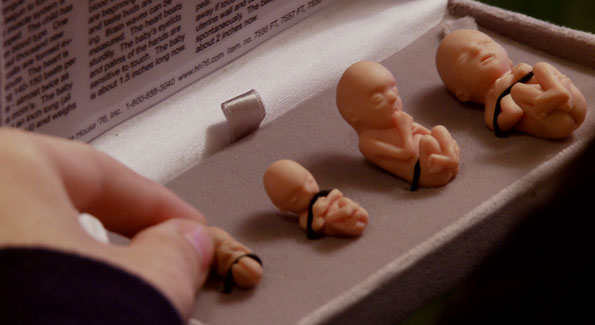
No strangers to controversial subjects, as their previous film JESUS CAMP demonstrated, the duo take a critical look at abortion, at the titular microcosm, a street corner where a clinic is situated right across the street from a pro-life organization. Expertly allowing the passionate pro- and anti- forces to tell their own stories, the doc emerges as close as possible to a film that could potentially be embraced by both sides in the intractable abortion debate, even if the pro-choice side is clearly favored. Eschewing narration, Ewing and Grady instead focus their cameras on the experiences of the women who are caught in the middle, often duped into believing the pro-life building is the abortion clinic due to their manipulative practices, and promised support to carry through with their unwanted pregnancies – support which doesn’t materialize in the way they expect. 12TH & DELAWARE is intelligent, subtle, and provocative.

Leave a comment

Filed under Documentary, Film, Recommendations, Sundance

IFP: More on What (Not) To Do For Film Festivals

The latest post in my contribution to IFP’s “Ask the Expert” blog is up, wrapping up my advice on What (Not) To Do For Film Festivals – covering promo materials and rejection/acceptance letters. Take a look here.

Update: The original post seems to have gone missing from IFP’s site, so I’ve posted the article below.

Dear Filmmakers:

In my last blog post, I took a page out of my own blog and discussed a few things filmmakers should and shouldn’t do when dealing with film festivals. This post continues that general topic, focusing on the submission screener, presskits and promotional materials, and the best (and worst) ways to respond to rejection or acceptance.

During the submission process, most festivals simply want to see your DVD. Many accept EPKs (electronic presskits) during this period as well, but, honestly, no one’s going to look at them unless and until the film is selected for inclusion. Usually, whoever processes the submission takes the screener and puts it one place, and everything else goes somewhere else. Keep this in mind before you start going crazy with your press materials, spending money and time that could be best served making sure your actual film is the best it can be. What this means: unless the festival explicitly asks for any of the following, you do not need to provide glossy presskit folders, posters, printed stills, or printed loglines, synopses, biographies, etc. To be clear – I’m not saying not to have a presskit. You should organize the electronic versions of all of these things and have them ready to email to the festival upon request. Film stills, in particular, are essential – a huge mistake many filmmakers make is not having a stills photographer around during production to take professional quality, high-resolution stills that can later be used to promote the film. Once again, have these available, but don’t worry about sending them in until the festival needs them.

While presskits serve a promotional purpose, it’s best to think of them as helping the festival promote your film to their audience, not helping you promote your film to the programmer. S/he will be judging whether to select the film or not based on the film itself, not on your promotional material. Which brings us to the issue of promotional materials: some filmmakers send the most unnecessary, and sometimes frankly bizarre things, in their submission packages. Programmers have received t-shirts, mugs, food, shot glasses, naked pictures, fast food gift certificates, stuffed animals, underwear, condoms, signed photos of celebrities completely unrelated to the submitted film, etc etc. Filmmakers often feel like this kind of stuff will help their film stand out, make them memorable, or maybe function as a bribe to get their film selected. Personally, I feel this is yet another example of wasted resources that could go toward improving your film. You can feel free to send promo materials, but know this – it will not get your film programmed. If you just want to show your creative marketing, great, but wait until you can use it on the right people – potential audience members – at the right time – after you’ve been selected.

What the festival does need is your screener. My recommendation is to submit artwork-free, label-free DVDs. Beyond the practical (paper labels can cause playback issues), the main reason I say this is that your screener artwork/design can make an unintentional first impression. Better to let things stay neutral and submit a simple DVD-R with the film’s title, your name, running time, and contact information, and whatever else the festival requires. (I go into more detail about this here.)

After you’ve completed your submission, it’s a waiting game. As I noted last time, while some limited communication with the festival is fine for appropriate professional purposes, be sensible. For example, if, since submitting to Festival A, you’ve been selected for Festival B, you should email Festival A to let them know the change to your premiere status – this is courteous and it may be a factor in Festival A’s decision. What’s not sensible? Contacting the festival to ask when they’re going to make their decisions. This info is usually easily available on the fest’s website, and ignoring it makes you a pest.

You’ve waited it out, the decision time has come, and you find out your film has been selected. Congratulations! Recognize that the festival is now dealing with dozens or even hundreds of filmmakers and they’ve anticipated that you have questions. Seasoned fests will have a system in place to provide you with answers – they’ll send out information that you need to read and forms that you need to complete, with deadlines that you need to follow. If, after reading through these, you still have unanswered questions, ask the appropriate person. Notice, I said the appropriate person. The info the fest provides often designates different people who are in charge of discrete areas – print traffickers to deal with your exhibition tape, publicity coordinators to deal with your press questions, hospitality coordinators to deal with your travel, etc. Don’t send the same question to all of these folks. Fest staff members are excited to have you participate in their event and they want to help you – trust that the right person will be able to get to your question and answer it, but have patience and recognize that they are probably receiving inquiries from other filmmakers too.

What happens if your submission unfortunately is not selected? The simplest course of action is to do nothing – accept that, for whatever reason, your film just wasn’t a match for this specific festival’s line-up. Resist the impulse to reply to your rejection notice with a catty comment – your film may not have made it this time, but that doesn’t mean the same programmer might not like your next film. Don’t burn bridges. Know that festivals receive more submissions than they can possibly show. Some are just plain bad, others are bad fits, still others are personally just not to a programmer’s liking, while others are fine or good, but there just aren’t enough slots to accommodate them. Some festivals are able to provide feedback as to why a submission wasn’t selected. Send them a note requesting feedback. Keep in mind that they may not be able to give it to you right this minute, because they have a festival to organize keeping them very busy, but they should be able to respond more fully after their event wraps with at least some general notes. The bottom line: stay professional and don’t take the rejection personally. Every filmmaker has been there.

Leave a comment

Filed under Film, Film Festivals, Recommendations

In Theatres: A SMALL ACT

Coming to theatres this Friday, October 29: A SMALL ACT

Jennifer Arnold’s inspirational doc premiered at Sundance, where it attracted the attention of Bill Gates and George Soros and began receiving pledges of support for the education charity spotlighted in the film to the tune of $300,000 and counting. HBO screened the film this summer, and it’s now coming to theatres for a limited run.

Simply and powerfully demonstrating the idea that a small act of charity can yield profound change for its recipient, Arnold’s film tells the story of Swedish Hilde Back and Kenyan Chris Mburu. Years ago, Hilde sponsored Chris, sending small amounts of money each month for his education in his rural village community – so small, she barely remembered it when she was contacted by the now-grown and successful Chris, a Harvard graduate and United Nations lawyer, who informed her that he had begun a scholarship program in her name. A SMALL ACT tells their story, as well as that of the top Kenyan students competing for the fund, as the impact of Hilde’s generosity reverberates through the decades to create hope for a new generation of students.

Leave a comment

Filed under Documentary, Film, Releases, Sundance

In Theatres: WASTE LAND

Coming to theatres next Friday, October 29: WASTE LAND

Lucy Walker followed up her critically acclaimed first two documentaries, DEVIL’S PLAYGROUND and BLINDSIGHT by premiering two new films at this year’s Sundance – COUNTDOWN TO ZERO and this upcoming Arthouse Films release, which took Sundance‘s World Cinema Documentary Audience Award. The doc went on to claim additional awards at numerous other festivals during its play on the circuit, including at Berlin and Full Frame, and it screened as part of DocuWeeks this Summer to qualify for Oscar consideration.

WASTE LAND follows artist Vik Muniz from Brooklyn back to his native Brazil to photograph a number of catadores, a diverse group of individuals who scrape together a living by picking through the world’s largest garbage dump for recyclable materials to sell. Inspired by his subject’s experiences, Muniz transforms his photographs into breathtaking, large-scale collages using the very garbage they comb through each day. These portraits, combined with the film’s stunning cinematography, reveal a remarkable, transformative beauty and dignity in the face of poverty and squalor.

1 Comment

Filed under Documentary, Film, Releases, Sundance